
Continuous condition monitoring across every critical asset
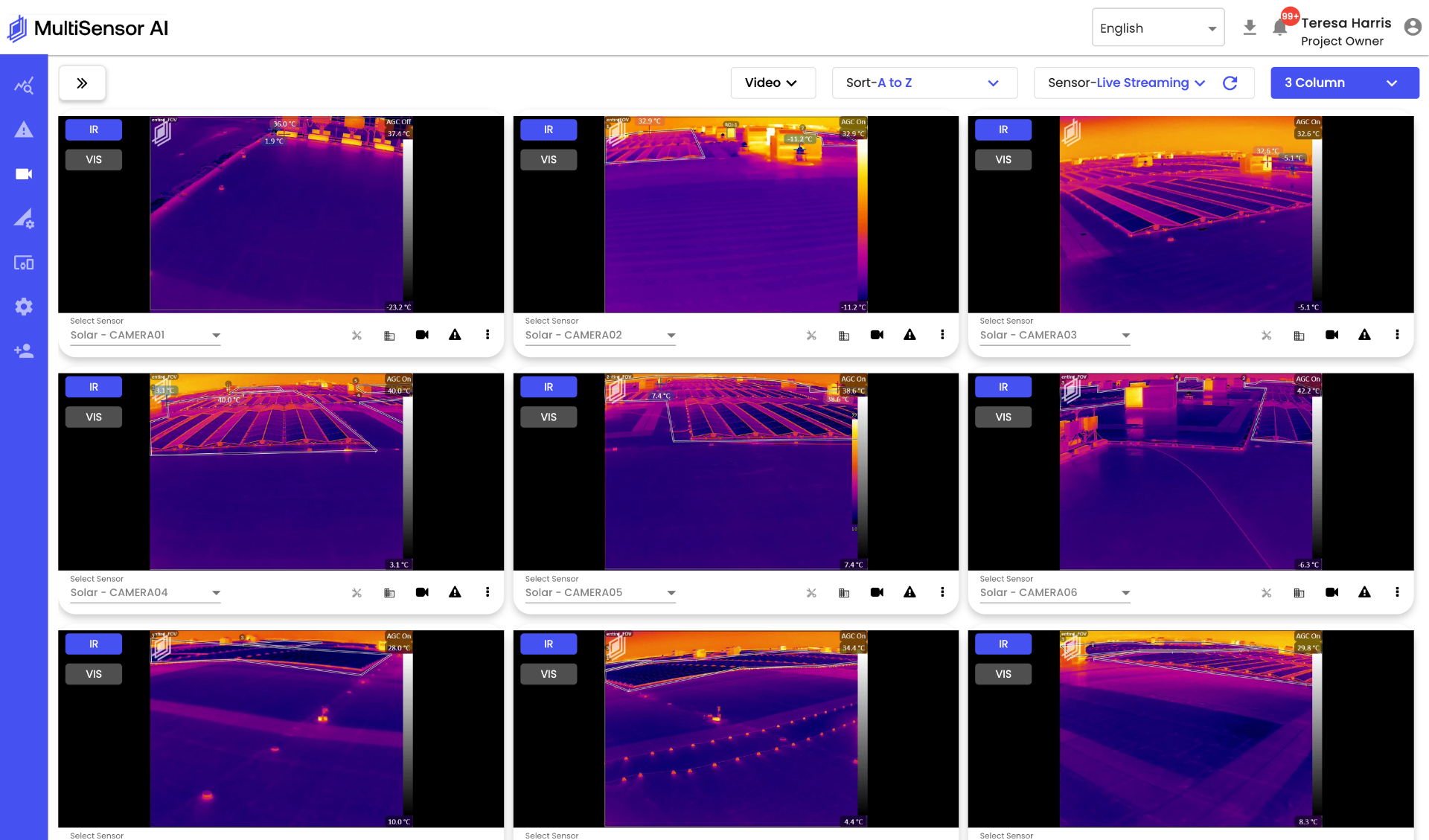
MSAI Connect watches your critical assets continuously, across four sensing domains at once: thermal, visual, vibration, and environmental. The sensors cross-check each other, so a fault gets caught whichever signal it surfaces in. Corroboration across domains separates a real fault from a one-off blip, so the alerts you get are worth acting on. That's the difference between a vibration program blind to electrical distribution and condition monitoring that sees the whole asset.
Trusted by industry leaders








Book My Demo
30 minutes. No commitment. We'll look at your assets, not a generic demo.
Built for reliability teams in distribution, parcel, cold storage, airports, and data centers - where a single-point-of-failure asset can halt the operation.
What is condition monitoring?
Condition monitoring is the practice of tracking asset health while equipment runs, so you catch degradation before it becomes failure. Traditional programs rely on a single technique: vibration analysis for rotating equipment, infrared thermography for electrical and thermal faults, oil analysis for lubrication, or acoustic monitoring for leaks and bearings. Each one sees a slice of asset health, never the whole picture.
Condition based monitoring, across more than one signal
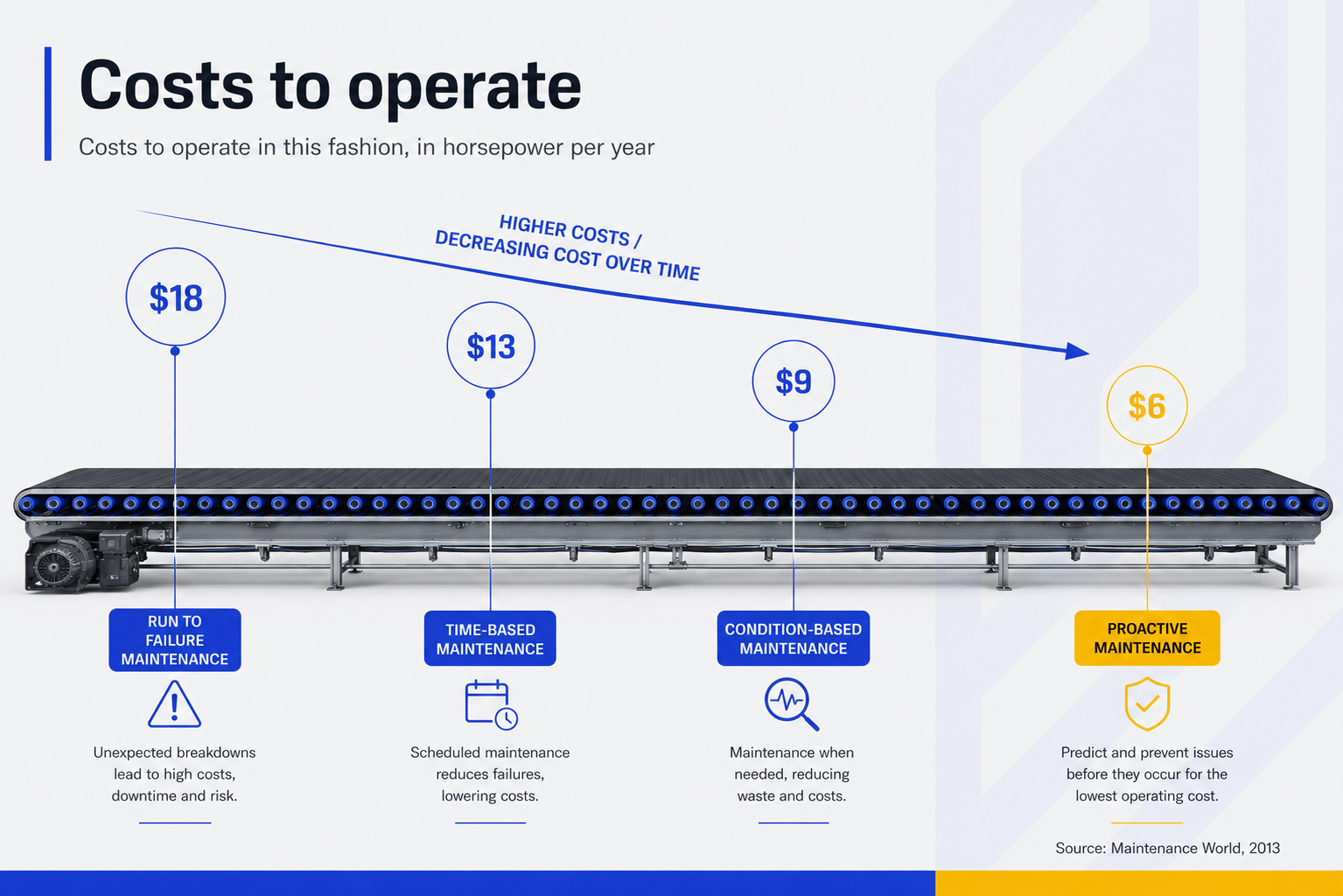
Condition based monitoring (CBM) schedules maintenance off actual asset condition instead of a fixed calendar. It only works as well as the signals feeding it.
- A vibration-only program can’t see a high-resistance electrical connection.
- A thermal-only program can miss a developing bearing fault.
MSAI runs thermal, visual, vibration, and environmental sensing together and corroborates across them, so condition based maintenance decisions rest on more than one data source.
By the time the alarm fires, it’s already bad. The question is what your monitoring isn’t watching.
You already know the assets are degrading between inspection cycles - you just can’t see it. Threshold alarms react at a fault condition, not the drift leading up to it. And whatever single modality you’re running only catches the failures that announce themselves through that one signal.
Reliability teams describe the same three blind spots:
“We monitor the high-value rotating equipment - but a lot of it isn’t really covered.”
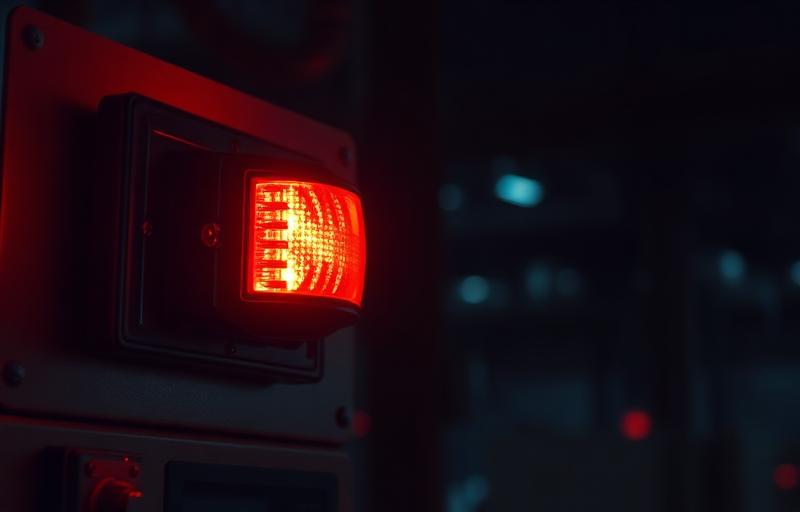
“Usually we find out when throughput drops. The alarm fires and we respond.”
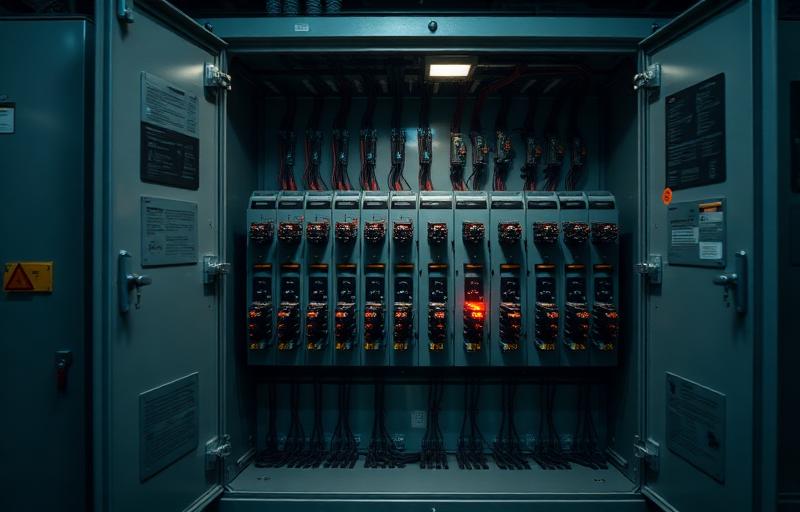
“We’ve got vibration on the motors. Electrical isn’t monitored continuously.”
That last one is where the most expensive failures live. Vibration covers rotating assets and misses electrical distribution entirely - and electrical degradation is the most frequent source of hard stops.
See how multi-sensor detection closes the gapThree gaps single-sensor monitoring leaves open. MSAI Connect closes all three.
MSAI Connect runs fixed-mount thermal, visual, vibration, and environmental sensing on your assets, unified through the MSAI Hub as an intelligence layer above the systems you already run. It doesn’t replace your CMMS, SCADA, or BMS - it surfaces what they can’t see.
See the whole picture - continuously.
Vibration protects rotating equipment but can’t see a high-resistance connection, a phase imbalance, or thermal buildup in a panel. MSAI spans electrical, mechanical, and environmental - so the failure gets caught whichever domain it develops in.
Timing - continuous, not a sample.
Vibration platforms that sample periodically capture as little as 1–10% of operational time. Fast-developing and intermittent faults are invisible between windows. MSAI monitors continuously, so an anomaly is visible within minutes of onset - not hours later when the next sample is taken.
Modality - corroborated, not isolated.
A single sensor forces a choice between sensitivity and noise. MSAI correlates signals across modalities, and expert-guided signal calibration tunes the system to your environment - so when an anomaly is confirmed across thermal, vibration, and visual, it’s credible, and a one-off blip on a single channel doesn’t escalate. That’s why MSAI alerts get acted on instead of dismissed.
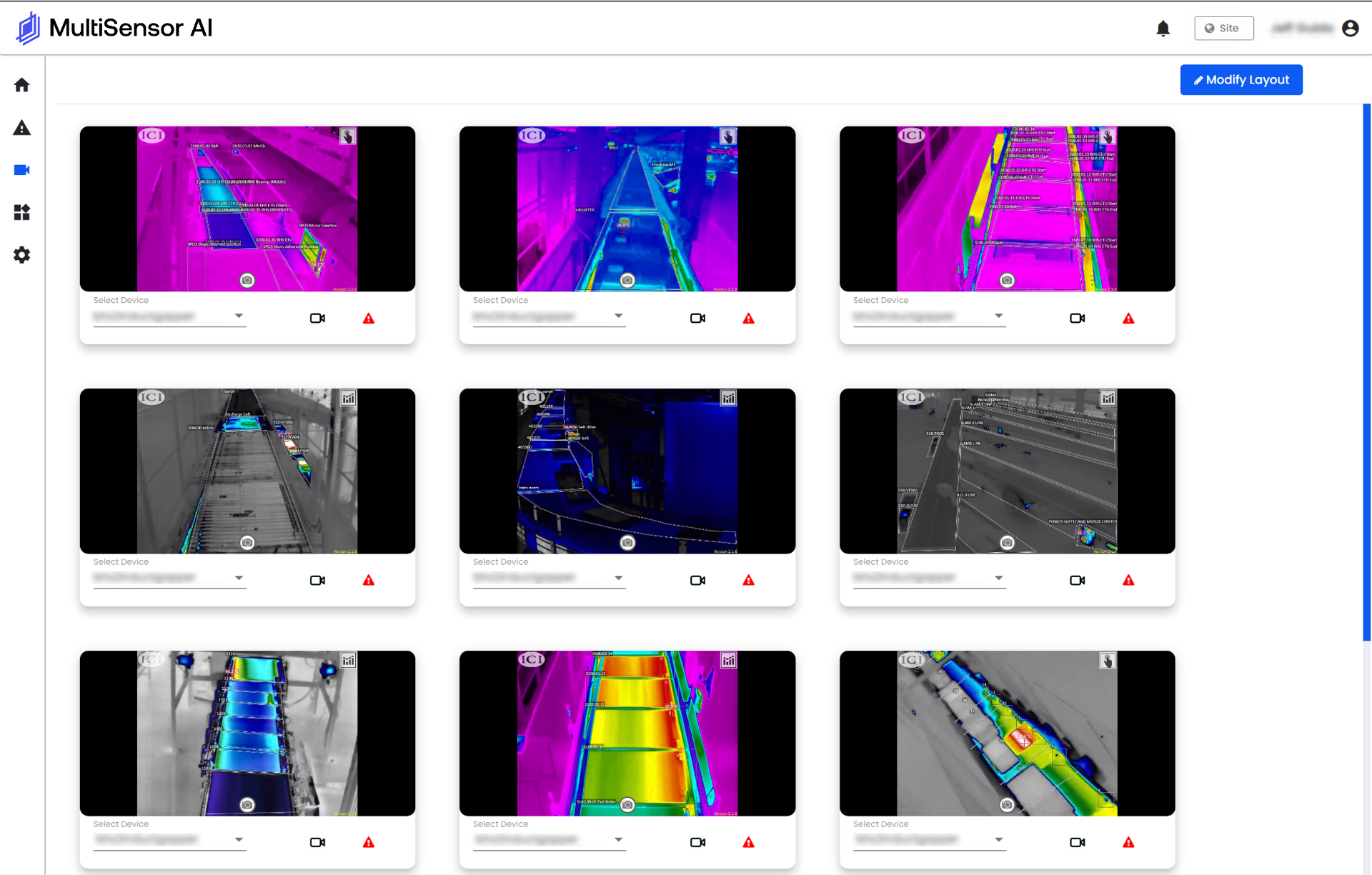
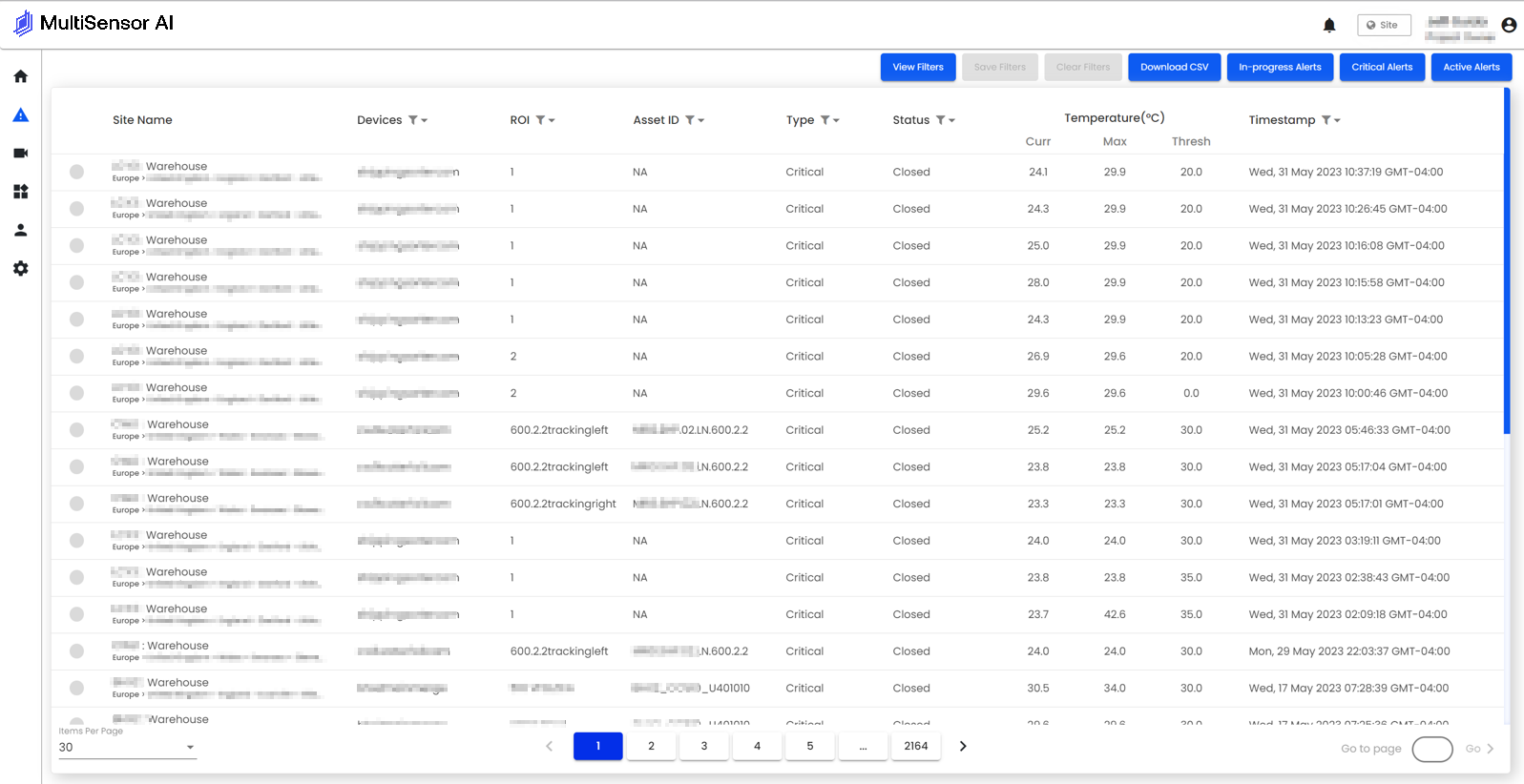
One platform, every critical asset across the facility.
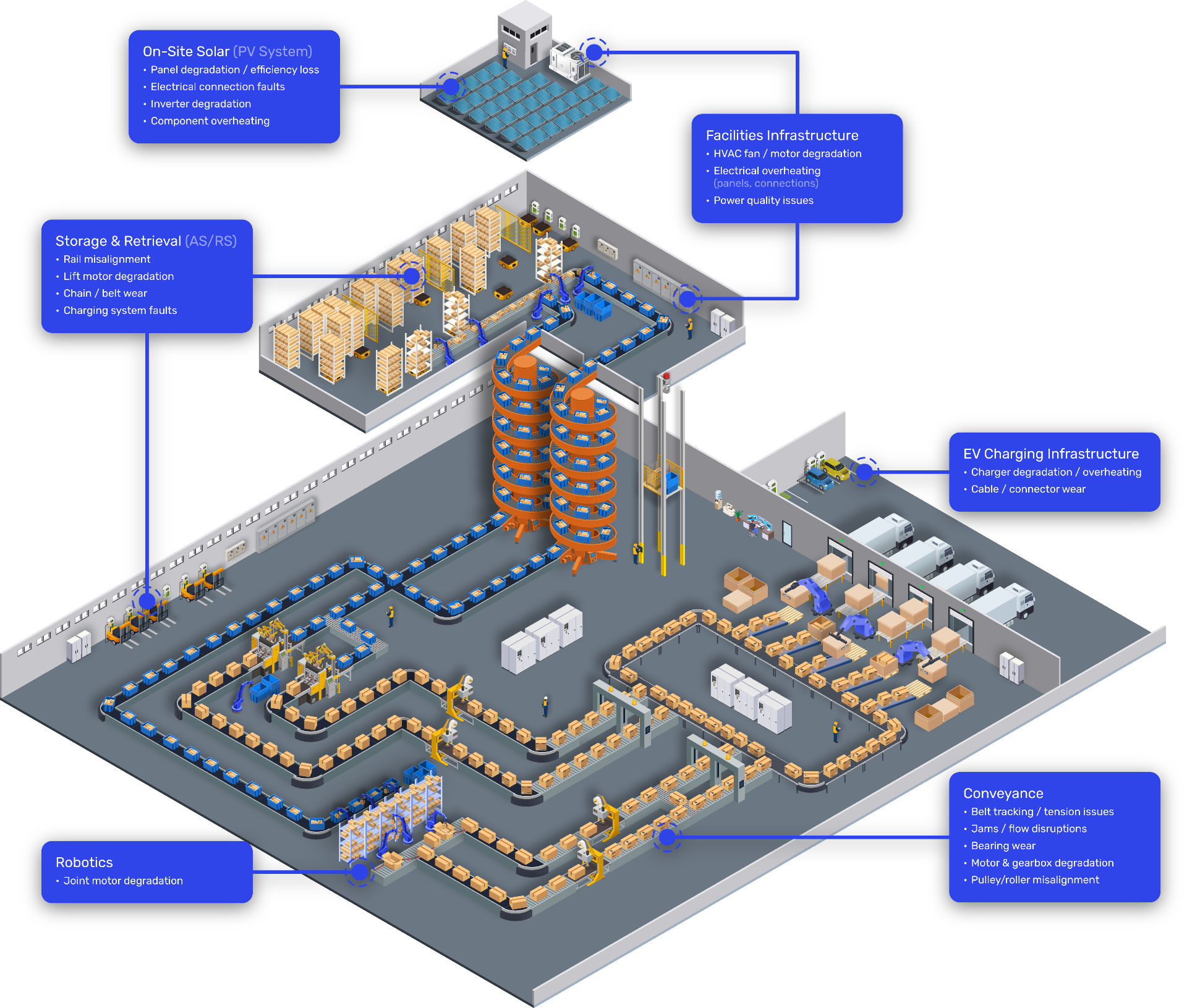
From rooftop solar to conveyance, storage and retrieval, robotics, EV charging, and facilities infrastructure - MSAI Connect monitors the assets that keep distribution operations running.
What you give up with single-sensor monitoring.
This is the gap. A single sensor is one domain, sampled part of the time, with no way to confirm itself. MSAI is continuous, cross-domain, and corroborated.
What one missed fault costs - and what catching it early is worth.
A single unplanned downtime event runs $12K–$24K once you count the stopped line, idled labor, the emergency callout at premium rates, and the secondary damage a seized asset takes out with it. The value of continuous, multi-sensor monitoring is the difference between that event and a part you swap during planned downtime.
The proof is documented, not theoretical
- Detected a conveyor belt running ~20°C above baseline in a high-throughput fulfillment center - repaired before failure, ~$10K in downtime avoided.
- Identified belt misalignment and sideguard friction early - corrected during scheduled downtime, ~3 hours of downtime and ~$18K in labor costs avoided.
- Detected early-stage failures across conveyance assets at a Fortune 50 distribution facility - full ROI within roughly one month.

What reliability and operations leaders tell us about MSAI.
avoided per unplanned downtime event - full ROI within ~1 month at a Fortune 50 distribution facility.
Our vibration program never touched the switchgear. MSAI caught a hot connection in a main panel weeks before it would've taken down the line.

Baggage handling can't wait for a quarterly inspection. We see the drift now, and we fix it on our schedule instead of at 4 a.m.

The difference is trust. When MSAI Connect flags something, my team acts on it - we're not chasing alarms that turn out to be nothing.


What you’ll see in 30 minutes
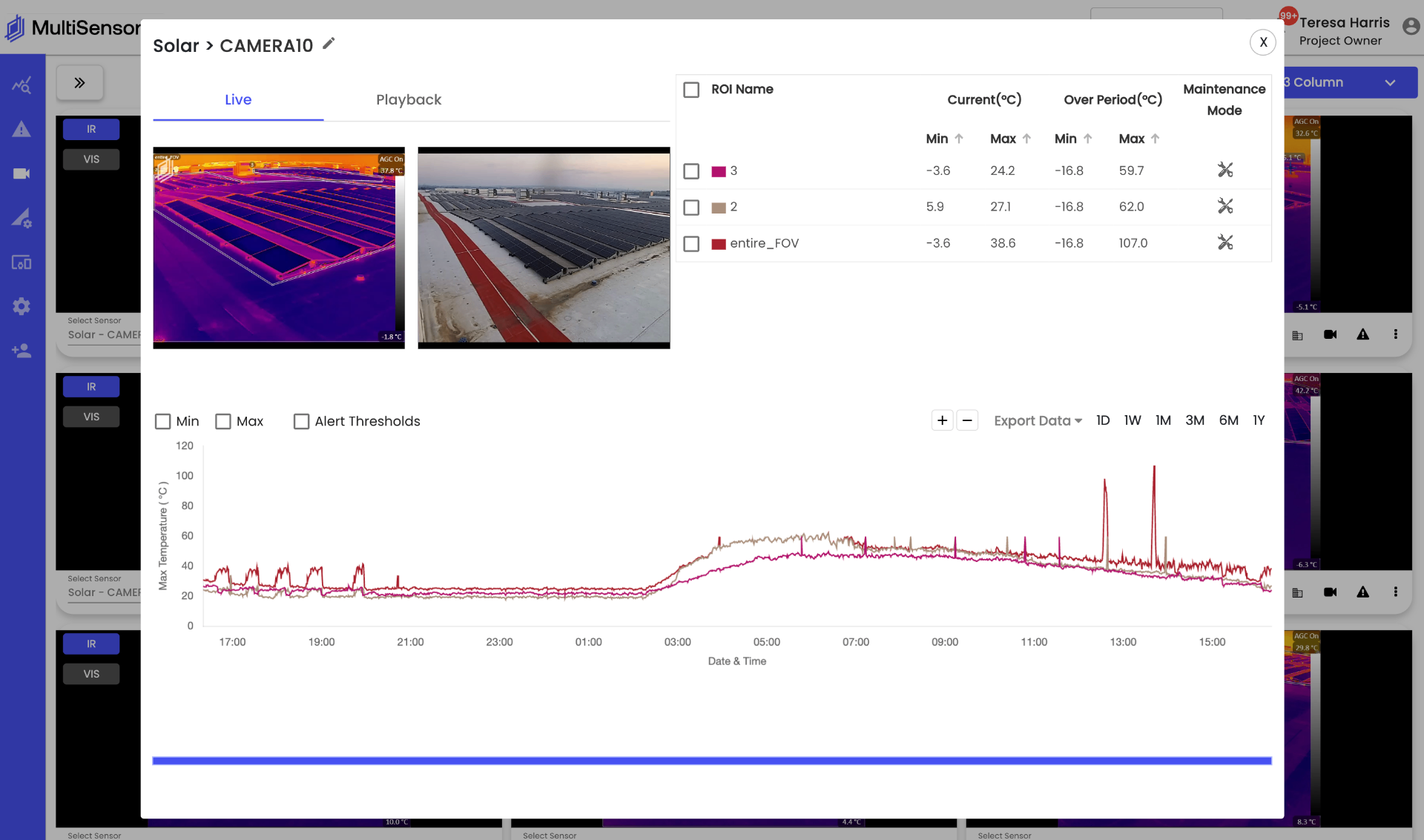
Live multi-sensor monitoring on real assets - what corroborated detection looks like when thermal, vibration, and visual line up on the same developing fault.
How continuous trending surfaces degradation between inspection cycles, and how expert-guided calibration keeps alerts credible.
What deployment looks like in a facility like yours - sensors, the MSAI Hub, and how it layers onto the systems you already run.
$12K–$24K avoided per unplanned downtime event.
Documented at a Fortune 50 distribution facility, with full ROI inside roughly one month.
Short FAQ
Stop trusting one sensor, sampled part of the time, to catch every failure. See the whole picture - continuously.
30 minutes. No commitment.